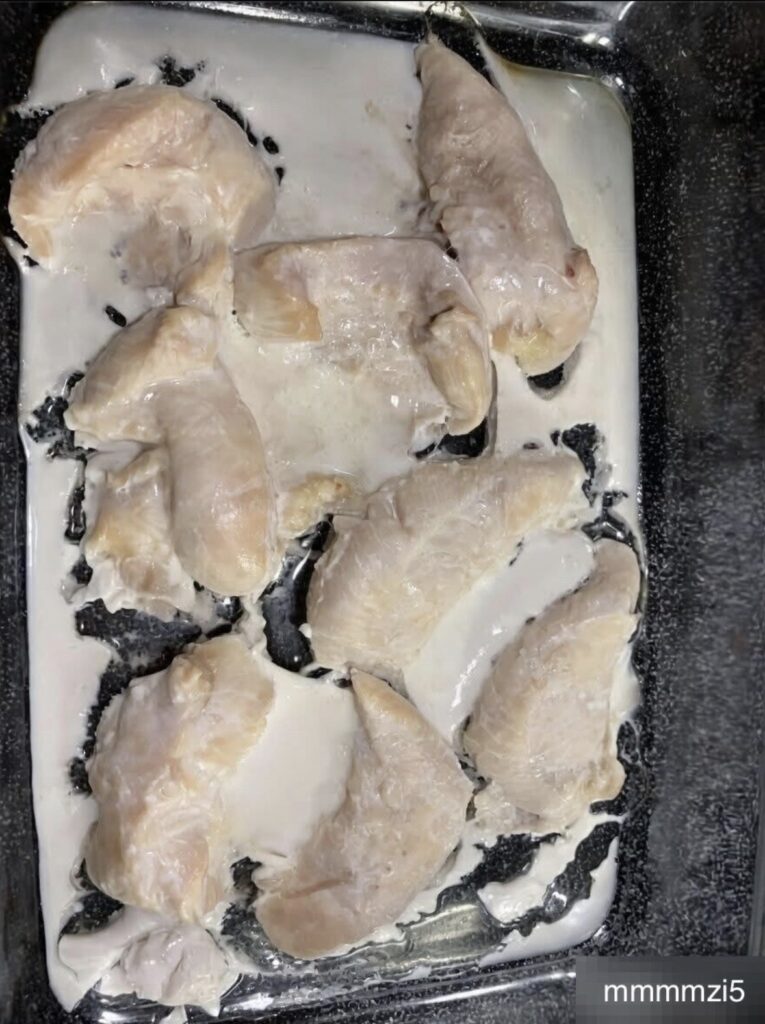
When cooking chicken, many people notice a white, slightly foamy or gel-like substance appearing on the surface. At first glance, it can look unusual—even concerning—especially for those unfamiliar with what’s happening. Some assume the chicken is spoiled or improperly cooked. In reality, this substance is completely natural and harmless. It is simply protein—primarily albumin—being released and transformed by heat. Understanding this process not only removes confusion but also helps you cook better, more confidently, and with greater control over texture and presentation.
The explanation lies in basic food science. Chicken muscle contains water and proteins tightly held within its structure. As heat is applied, those proteins begin to denature—meaning they change shape—and the muscle fibers contract. This contraction pushes moisture outward, and that moisture carries dissolved proteins with it. When it reaches the hotter surface of the meat, those proteins coagulate and turn white. It’s the same principle you see when egg whites go from clear to white during cooking. Once you recognize that similarity, the process becomes much easier to understand.
Not all chicken produces the same amount of this white protein. Lean cuts, especially boneless and skinless chicken breasts, tend to show it more because they contain less fat to retain moisture. Cooking method also matters significantly. High heat—such as grilling, pan-searing, or roasting—causes rapid contraction of muscle fibers, forcing more liquid out quickly. This often leads to a more visible white layer. In contrast, gentler methods like poaching or slow baking allow proteins to react more gradually, reducing how much accumulates on the surface. Even previously frozen chicken may release more of this substance, as freezing alters the internal structure and increases moisture loss during cooking.
It’s important to understand that this white protein has nothing to do with food safety. It does not mean the chicken is undercooked or spoiled. The only reliable indicator of safe chicken is internal temperature—165°F (74°C). The presence of albumin does not affect safety or significantly change taste. Most of the concern is visual. Once the chicken is sliced or served with sauces, the protein is barely noticeable. Still, for those who care about presentation, there are simple ways to reduce it.
Several easy kitchen techniques can help control or minimize this effect. Brining is one of the most effective. Soaking chicken in saltwater allows it to retain more moisture and stabilizes proteins, reducing how much is pushed out during cooking. Letting chicken rest at room temperature before cooking also helps it heat more evenly, preventing sudden protein contraction. Using moderate heat instead of extreme temperatures gives proteins time to adjust gradually. Finally, allowing the chicken to rest after cooking helps redistribute juices, improving both texture and appearance.
At its core, this phenomenon is simply a visible reminder of how heat interacts with food. Cooking is not just a mechanical process—it’s a chemical one. Proteins change, water moves, and structure transforms. What may seem like a flaw is actually evidence that the cooking process is working as expected. Once you understand it, the mystery disappears, replaced by control and confidence.
In the end, the white protein on chicken is not something to fear or avoid—it’s something to understand. With a few simple adjustments, you can reduce its appearance if desired, but even if you don’t, it has no negative impact on your meal. What matters most is technique, awareness, and consistency. When those come together, the result is chicken that is tender, juicy, and full of flavor—every single time.