There are moments in life that arrive without warning and quietly rearrange everything you thought you understood about love, responsibility, and the meaning of family. For me, that moment came not with celebration or anticipation, but with sudden, unexpected responsibility. I had imagined my later years would be defined by rest, reflection, and the gentle pace of a life winding down. Instead, I found myself standing in my living room, face to face with a small child whose world had already begun to fall apart before he could understand why. My grandson was only two years old when life placed him in my care, not through careful planning or mutual agreement, but through absence—his father gone in all the ways that matter, and his mother vanishing without explanation. There was no time to question how or why. There was only the immediate reality of a child who needed stability, warmth, and someone willing to step forward. And so, without ceremony, we became “us.” In that quiet transition, I learned that love does not always begin with choice—it often begins with necessity, and grows through presence.

The years that followed were filled with a rhythm I had never expected to learn again. My days were no longer my own; they were shaped by small routines that carried immense meaning. I learned the difference between cries that signaled hunger and those that revealed fear. I learned that pancakes needed to be square, not round, because that was how he liked them, and that bedtime stories were not just stories, but anchors of safety in a world that had already proven uncertain. Time, in its quiet way, moved forward. The toddler became a boy, and the boy became someone with opinions, laughter, and memories shaped within the walls of my home. Together, we built something that felt complete, something that did not rely on what had been lost but instead focused on what we had created. There was a quiet pride in that life, a sense that despite everything, we had managed not only to survive but to form a bond that felt unshakable. I believed, perhaps too confidently, that what we had built could not be undone.

But life does not always honor the emotional truths we hold onto. One day, without warning, the past returned in a form I barely recognized. His mother reappeared, transformed into someone distant and unrecognizable, carrying with her the authority of law and the detachment of someone who viewed our years together as temporary, almost transactional. There was no acknowledgment of what had been shared, no recognition of the countless nights, the small victories, the quiet sacrifices that had shaped my grandson’s life. Instead, there were documents, signatures, and a language that reduced love to legality. I tried to speak, to argue, to remind them that this was not a situation that could be understood through paperwork alone. But the truth was painfully clear: biology and law carried more weight than memory and care. The day he was taken from my home remains etched in my mind with a clarity that time has not softened. His face pressed against the car window, his small hand against the glass, searching for reassurance I could not give—those images lingered long after the car disappeared from view.
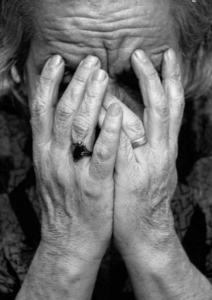
What followed was not just silence, but an absence that reshaped everything around me. The house, once filled with the sounds of daily life, became unbearably quiet. Rooms that had held laughter now echoed with stillness. I found myself holding onto routines that no longer served a purpose—cleaning his room, opening windows, preserving a space that felt suspended in time. Birthdays became rituals of memory rather than celebration. I baked cakes no one would eat, lit candles no one would see, and sat with the quiet weight of years that seemed to have vanished without acknowledgment. It was not just the loss of presence that hurt, but the feeling that those years had been erased, as though they had never truly existed in the eyes of the world. And yet, even in that silence, something remained. A quiet hope, perhaps irrational but persistent, that the bond we had built had not been entirely severed, that somewhere, in ways I could not see, it still endured.
Time, as it often does, moved forward regardless of whether I was ready. Years passed, and I learned to live alongside absence rather than fight it. I stopped expecting, stopped imagining moments that might never come. And then, one ordinary afternoon, everything changed with something as simple as a knock on the door. It is strange how such a small sound can carry so much weight. As I approached the door, I told myself not to hope, not to let imagination create something that reality might not fulfill. But when I opened it, there he was. Not the small boy I remembered, but a young man—taller, stronger, yet unmistakably the same. In that instant, time seemed to collapse, years folding into a single moment of recognition. The embrace that followed carried everything we had lost, everything we had endured separately, and everything that had remained unspoken. There are no words that fully capture what it means to regain something you believed was gone forever, but in that moment, I understood that some bonds do not break—they simply wait.

What he said next revealed a truth I had not allowed myself to believe. Through all those years, he had not forgotten. He had carried those memories quietly, holding onto them even when circumstances forced distance between us. And more than that, he had made a choice. Now that he was old enough to decide for himself, he chose to return—not out of obligation, but out of love. The keys he placed in my hand symbolized more than a place to live; they represented intention, loyalty, and a recognition of what we had shared. He had planned, saved, and waited for the moment when he could reclaim that connection on his own terms. In a world that had once taken him away without choice, he returned with one. That decision carried a weight far greater than any legal document ever could.
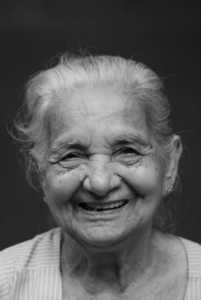
In the time we have now, I have come to understand something that years of loss tried to obscure. Family is not defined solely by blood, nor by legal authority, nor by the structures society places around relationships. It is defined by presence, by the willingness to show up, to care, to remain when it would be easier to leave. The years we lost cannot be reclaimed, but they have not diminished what remains. Instead, they have revealed its strength. Watching him now, I sometimes still see the child he once was—the vulnerability, the quiet need for reassurance—but I also see the person he has become, shaped not only by absence, but by resilience and memory. Life may stretch relationships, test them, and even attempt to sever them, but some connections endure beyond time and circumstance. They do not disappear. They wait, quietly, until the moment they can be lived again.